
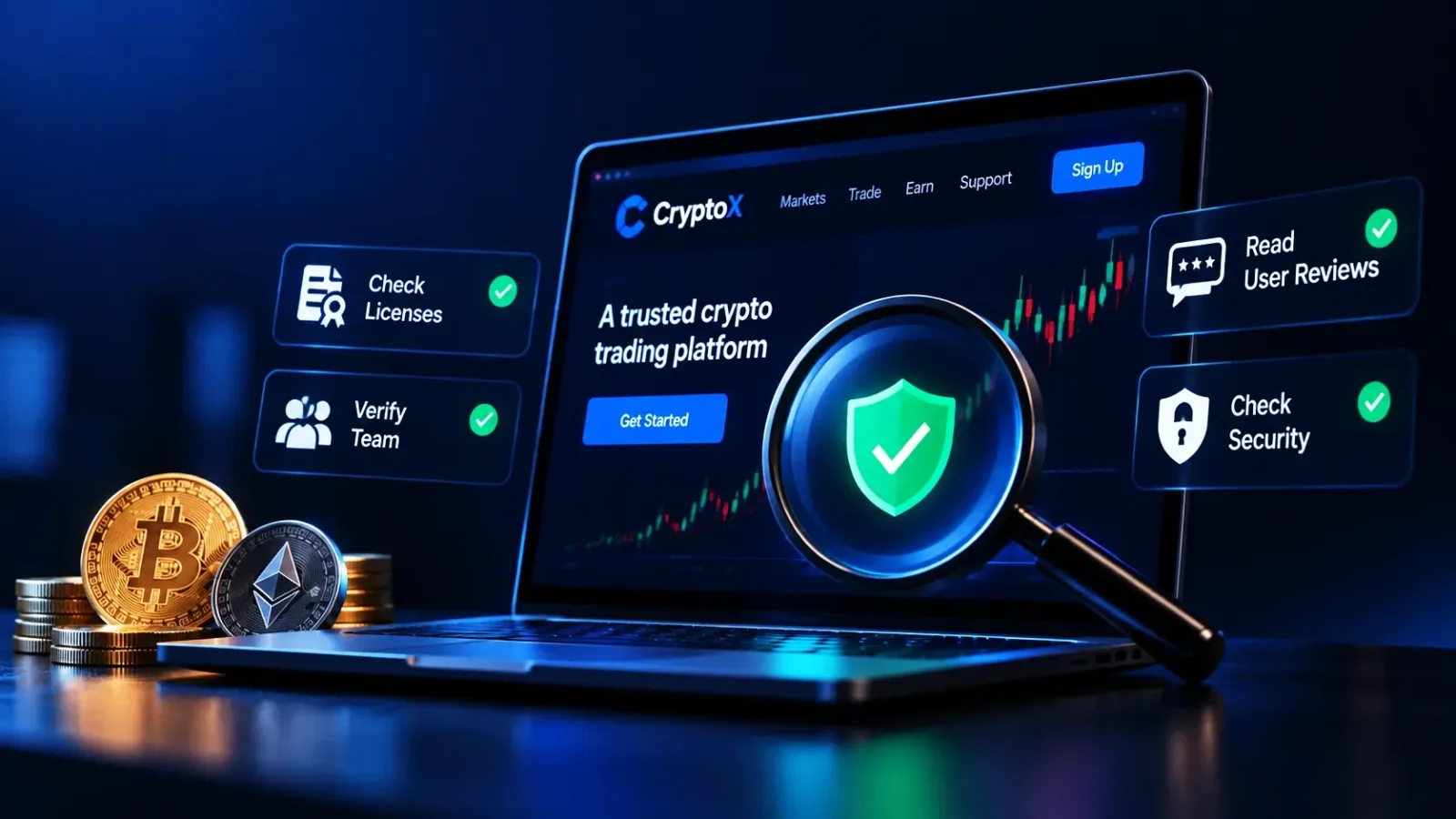
Fake trading platforms are built to look exactly like the real thing. They have polished websites, working apps, live-looking price charts, a support chat and an account balance that grows every week. Many people only discover the truth when they try to withdraw.
The good news is that you don’t need to be an expert to check a platform. Regulators in the US and Canada publish free tools that tell you, in minutes, whether a company is allowed to do business with you. This guide walks through the checks that matter most, in a practical order.
✅ Key takeaways double-click to edit
- Check registration first, with the regulator’s own search tool, not with documents the platform sends you.
- Make sure the website you are using is the one on the regulator’s record. Scammers copy the names of real, registered firms.
- Being in an app store, having a professional website or showing big profits proves nothing.
- How you found the platform matters as much as the platform itself. An investment introduced by someone you met online is one of the most common patterns in these scams.
- A real platform takes fees from your balance. A request to send new money before you can withdraw is a stop sign.
Why This Check Matters
The FBI calls cryptocurrency investment fraud the highest source of financial losses to Americans in 2025. That year, more than 61,000 people reported it to the FBI’s Internet Crime Complaint Center (IC3), with losses of more than $7.2 billion.
Checking doesn’t take long. It is worth doing before you deposit, and it is worth doing now if you have already deposited and something feels wrong.
Step 1: Check Whether the Platform Is Registered
Companies that hold or trade crypto for customers generally need to be registered or licensed where those customers live. Which register applies depends on what the platform says it does.
In the United States
- Exchanges and crypto buy/sell services: search FinCEN’s MSB Registrant Search for a federal money services business registration, and NMLS Consumer Access for state money transmitter licences. The CFTC points investors to both of these for companies dealing in virtual currency.
- Trading with leverage, futures, options or “forex”: search NFA BASIC, which shows CFTC registration, disciplinary history and financial information.
- Brokers and investment advisers: search FINRA BrokerCheck and the SEC’s adviser search, or ask your state securities regulator, which you can find through NASAA.
The CFTC brings all of these together on one page at cftc.gov/check.
In Canada
- Crypto trading platforms: Canadian securities regulators publish a list of crypto trading platforms authorized to do business with Canadians. Check that the entry covers your province and that the decision hasn’t expired. The CSA separately lists platforms that have filed pre-registration undertakings; check whether the undertaking is still current.
- Anyone selling investments: use the CSA’s national registration search, and check the CSA Disciplined List and cease trade orders.
- Québec: the Autorité des marchés financiers keeps its own register and warnings.
ℹ Info callout Registration is necessary, not sufficient double-click to edit
The CFTC is clear that registration and a clean record won’t protect you from fraud on their own. Treat registration as the first gate: an unregistered platform should stop you; a registered one still needs the checks below.
Step 2: Make Sure You Are on the Real Firm’s Website
A common trick is to borrow the name, registration number and address of a genuine, registered company and put them on a fake website. The registration search says “registered”, and the victim relaxes.
So when you find a match, compare the details on the regulator’s record with the platform you are actually using:
- Is the website address on the regulator’s record the same as the one you log in to? One letter, a hyphen or a different ending (.com, .net, .io) is enough to make it a different site.
- Do the phone numbers and email addresses match the official ones?
- If in doubt, contact the registered firm using the details on the regulator’s website, not the ones the platform gave you, and ask whether you have an account with them.
Step 3: Check the Warning Lists
Regulators also publish lists of firms they have concerns about:
- The CFTC’s RED List names foreign entities that appear to be acting in a way that requires CFTC registration without being registered. Not being on the list doesn’t mean a firm is registered.
- The SEC’s PAUSE list names unregistered entities soliciting investors. It is linked from cftc.gov/check.
- In Canada, check the CSA’s investor alerts and your provincial regulator’s warnings.
Then search the platform’s name together with words like “scam”, “withdrawal” or “complaint”. A cluster of recent posts from people who can’t withdraw is a strong signal.
Step 4: Look Closely at the Website and App
Fake platforms are often short-lived. The CFTC suggests checking how long a trading website has existed using ICANN’s free registration data lookup. A “global exchange” whose web address was registered a few months ago deserves serious suspicion.
Other things to look at:
- App store listings. A joint alert from the SEC, CFTC, FINRA and NASAA warns that an app being available in an official app store does not make it legitimate.
- The balance and the charts. The same alert warns that balances showing large returns, and “real time” trading information, can be fabricated. A fake platform controls every number on your screen.
- How you deposit. Being told to pay only in crypto, to send money to an individual or an unrelated company, or to describe the payment as something else, are all red flags.
- Who you talk to. Genuine platforms use their own support system. A “customer service manager” who only talks to you on WhatsApp or Telegram is a warning sign.
Step 5: Think About How You Found It
This is the step people skip, and it is often the most revealing. Regulators describe a pattern sometimes called a relationship investment scam, or “pig butchering”:
- Someone contacts you out of the blue, on social media, a dating app, a “wrong number” text or a group chat.
- They build a friendship or romance over weeks, and move the conversation to a private messaging app.
- They mention that they, or a relative or other “insider”, make money trading crypto or foreign currency with inside knowledge.
- They guide you to a specific platform, help you open an account, and show you how to deposit.
- Your balance grows quickly. You may even be allowed to withdraw a small amount, to build trust.
- When you try to take out a larger sum, problems begin.
The Canadian Anti-Fraud Centre adds that unsolicited investment opportunities can come even from friends and family, often because they were drawn in first.
Already deposited and something feels wrong? A member of our team can check the platform and your situation for free, and tell you what it most likely means. Start your free assessment →
Step 6: The Withdrawal Test
The clearest test of a platform is what happens when you ask for your money back. On a legitimate exchange, withdrawal and network fees are shown before you confirm and are taken from the amount you are withdrawing.
On a fake platform, the withdrawal is blocked behind a new payment: a tax, an anti-money-laundering deposit, a verification fee, an “unlock” fee or a minimum balance. Regulators warn that people asked to pay these usually never get their funds back, and paying more typically means losing more.
Don’t “test” a suspicious platform by depositing more. If you already have money there, request a withdrawal in writing and keep a copy of the reply.
Real Platform or Fake? A Quick Comparison
| Legitimate platform | Fake platform | |
|---|---|---|
| Registration | Appears on the regulator’s search, with the same website address | Not registered, or borrowing a real firm’s name |
| How you found it | You chose it yourself | Introduced by someone you met online or a “mentor” |
| Returns | Go up and down with the market | Steady, high, “guaranteed” |
| Support | Official ticket system or help centre | Private messaging apps |
| Withdrawal fees | Deducted from your balance, shown upfront | New money required before release |
| Pressure | None | Deadlines, bonuses that expire, threats of losing everything |
If the Platform Fails These Checks
① Steps double-click to edit · + add
→ Step Stop sending money double-click to edit
Including fees, taxes or deposits to “unlock” a withdrawal, and including money sent through the person who introduced you.
→ Step Save your evidence double-click to edit
Screenshot your balance, transaction history and every message, and note the website address. Our guide to finding your transaction ID and wallet address shows what matters most.
→ Step Call your bank double-click to edit
If any money left your account by card or bank transfer, call your bank straight away. Speed makes a real difference.
→ Step Report it double-click to edit
In the US, to the FBI at ic3.gov and the FTC. In Canada, to the Canadian Anti-Fraud Centre. See where to report for every option.
Then expect, and ignore, the “recovery” offers that often follow. Our guide to spotting fake recovery services explains why.
❓ FAQ section Questions people ask double-click to edit · + add
Q Question The platform says it is licensed in another country. Is that enough? double-click to edit
Not on its own. A firm generally needs to be registered where its customers are. A licence from a distant offshore regulator, or a certificate image on the website, is not a substitute for checking the US or Canadian registers yourself.
Q Question I was able to withdraw a small amount. Doesn’t that prove it is real? double-click to edit
No. Regulators warn that fraudsters may allow a small withdrawal early on to build trust and encourage larger deposits.
Q Question The app is in the Apple App Store and Google Play. Is that a good sign? double-click to edit
It isn’t evidence either way. The SEC, CFTC, FINRA and NASAA specifically warn that an app being available in an official app store does not make it legitimate.
Q Question My account shows big profits. Are they real? double-click to edit
On a fake platform, the balance is just a number the operator controls. Profits only become real when they reach an account you control, such as your bank or a wallet only you hold the keys to.
Q Question A friend recommended it and is making money. Can I trust it? double-click to edit
Check it anyway. Your friend may have been drawn in first and may only be seeing numbers on a screen. The same checks apply, whoever recommended it.
📚 Sources double-click to edit
- FBI Internet Crime Complaint Center: 2025 Internet Crime Report
- SEC, CFTC, FINRA and NASAA: Relationship Investment Scams – Investor Alert
- CFTC: Check registration and background and romance and relationship scam advisory
- CFTC: RED (Registration Deficient) List
- Canadian Securities Administrators: Crypto trading platforms authorized to do business with Canadians and Are they registered?
- Canadian Anti-Fraud Centre: Investment scams
This guide is general information, not legal or financial advice. See our Disclaimer.